Midwest Cities Expand Public Transit: 4 Examples


Across the Midwest, growing metropolitan areas are increasing investments in public transit, as well as identifying new ways to expand people’s access to transportation and encourage higher use. By thinking creatively about what types of service to offer, transit agencies in cities like Madison and Omaha are reaching more residents with buses and shared rides, strengthening their local economies, meeting their workforce needs and addressing equity in their neighborhoods.
Scroll down for a brief overview of other communities’ recent public transit investments.
Metro: Omaha, Nebraska
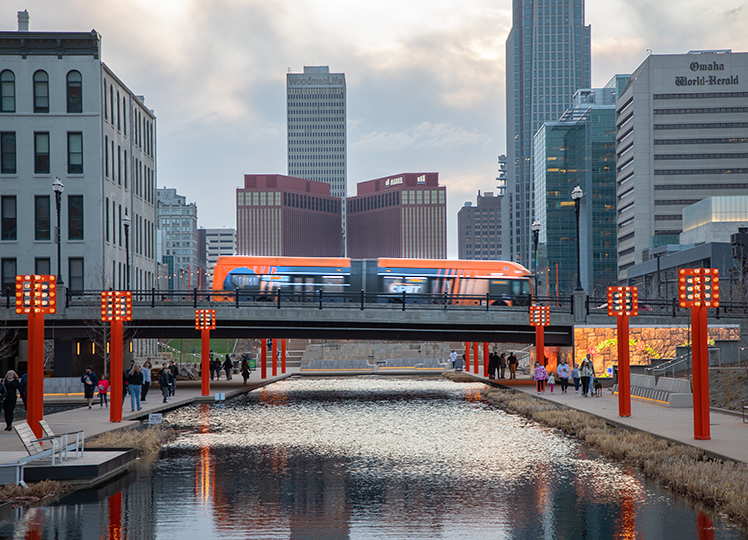
In Nebraska, Omaha’s Metro bus system announced a series of significant public transit investments in 2022. The project, called MetroNEXT, increased frequency on several local routes, added more service on evenings and weekends, and expanded service to nearby suburbs and Eppley Airport. Metro is also constructing new bus shelters with real-time arrival displays. A recent funding increase allows Metro to offer free rides to all K-12 students in Omaha and surrounding communities.
Prior to unveiling these enhancements to public transit, Metro launched Omaha Rapid Bus Transit (ORBT), the region’s first bus rapid transit line. Bus rapid transit operates similar to a light rail, providing frequent, fast service along key corridors.1 ORBT serves more than 25 bus stops along Omaha’s busy Dodge Street corridor, running every 10 minutes.
Public Transit in Iowa City, Iowa
Since 2018, Iowa City leaders have implemented plans to reduce transportation-related emissions in the region, with a goal of reaching net zero carbon emissions in the next 25 years.3 Part of this effort focused on improving the public transit system. By working with transportation experts to create an “optimized version” of Iowa City’s transit system, leaders identified a cost-neutral way to increase frequency on core bus routes and add Saturday service to routes that had not previously operated on weekends.4
In August 2023, the Iowa City Council voted to make fare on all Iowa City buses free through summer 2025. The pilot program aims to identify how fare-free transit impacts bus riders and whether it helps make transit safer, more reliable and more sustainable. Leaders chose to increase parking fees in Iowa City as a source of revenue for the fare-free pilot program. Darian Nagle-Gamm, Iowa City’s Director of Transportation Services, said there is interest in extending the pilot program past summer 2025 to reduce barriers to riding and make buses more welcoming for residents.